
Emergency Avian First Aid Kit
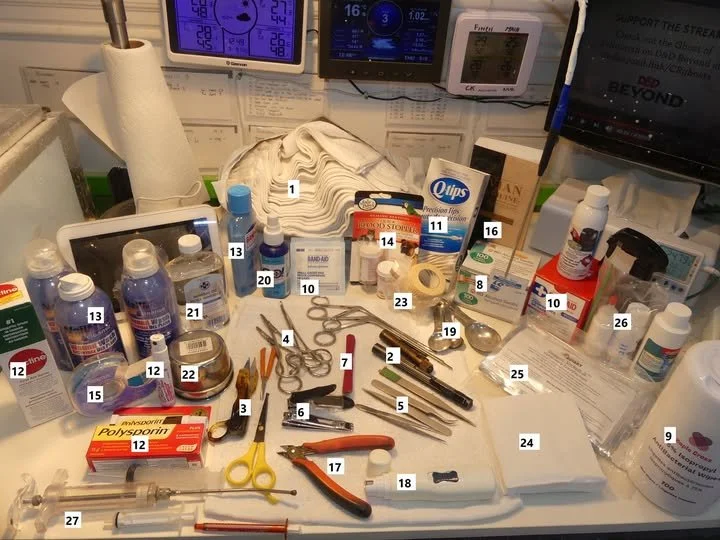
If you have birdies, it is a great idea to have an avian emergency first aid kit prepared. Emergencies do come up with our playful and inquisitive friends, their natural curiosity does get them into trouble, and it is our responsibility to be able to help them if they get hurt. In this post I will go over what I include in a basic first aid kit, of which I keep several, and what I include in an extended first aid kit. The picture in this post is of my extended kit, and shows examples of the brands and sizes I like to use. All of the items are inexpensive and can be found at a local drug store, a good pet shop, or on Amazon.ca
The most important things about this kit is that it is kept stocked, items used are replaced quickly, and everything is clean. Also important is that everything is in one place, easy to find and easy to access with only one hand. Nothing is worse than holding a bleeding and struggling bird in one hand while searching cabinets and drawers for what you need, racing from room to room, or trying to open a stubborn container that requires two hands.
Basic First Aid Kit....
Items with a number are shown in the picture.
-Note book for recording symptoms and treatments and anything else a vet might need to know.
-Thermometer, for noting the environment and setting up a hospital cage.
-Hospital cage, a place to keep your birdie at 29degC. Will detail in future post.
-Small zip lock baggies for taking samples of droppings and such.
-1. Towels. Used to wrap a struggling bird, dry a wet bird, clean up messes and a thousand and one other tasks. I purchase them in bulk off Amazon, very inexpensive and ensures I always have clean ones ready.
-2. Flashlights. One is good, two is better because only having one means the batteries will always be dead just when you need it most.
-3. Scissors. So useful, have a blunt tipped pair for general use and a fine tipped pair for cutting off string wound around a foot.
-4. Hemostats. Basically fine tipped pliers shaped like scissors, and can lock in the closed position. Useful for clamping off bleeding blood feathers.
-5. Tweezers. Several different shaped pairs, for removing splinters, foreign objects, etc. Blunt and sharp nosed pairs.
- Needle nosed and large pliers. I always have a pair on me, for unbending chain, bending cage bars, or just breaking stuff to get a bird unstuck.
- Wire cutters, again I always have a large and small pair on me for cutting cage bars, wires, cables, ties, anything and everything. If you are picking up a birdie from me, ask to see my daily carry items. I wear these pants for a reason!
-6. Nail clippers, for trimming broken or long nails, or any close up cutting.
-7. Nail files, for working on nails and beaks. I like to use the disposable kind, no worries about keeping them clean and very cheap.
-8. Antiseptic towelettes and pads. At least 70% alcohol content, clean everything before and after you use it, and any part of the birdie you have to work on.
-9. Alcohol wipes. Cleaning your hands and all your tools before and after is very important.
-10. Gauze pads, for wiping away blood and covering wounds, apply pressure to stop bleeding.
-11. Q Tips. cleaning out small wounds, swabbing out mouth, getting material out of mouth. Also very useful for using blood clot powder. Wet Q-tip, tap against towel to remove excess water, dip in pile of poured out clot powder, and apply to wound.
-12. Antibiotic creams, ointments and sprays. This is a controversial topic for some. I rely on these heavily, a cleaned wound is a wound that will heal. Creams and ointments with pain relief like polysporin are great if used carefully. Sprays are useful in areas covered by feathers, and for quick relief.
-13. Wound wash. Again, a clean wound is one that will heal well. Better and easier than tap water, sterile wash sprays are very useful. I buy in bulk.
-14. Blood clot powder. Extremely important, used to stop bleeding on small wounds such as bitten toes and broken nails. Can find at any pet store in the dog and cat nail care area.
- Contact lens solution for clearing out eyes
- Aloe Vera for light burns. Only use the pure aloe, no other additives.
-15. Surgical tape. Good for holding gauze to a wound, taping up a leg, splints, so many uses, a must have. Make sure to get a quality easy removal tape.
-16. INSTRUCTIONS! Extremely important to know what you are doing! A big book is best kept on the bookshelf and perused regularly. A small book is good for the kit, or even just print out a basic avian first aid PDF from a trusted internet source. You can find several, and use the ones that makes the most sense for you.
What to Include in an Extended Kit...
-16. Very sharp small detail clippers. Good for nail and beak trims and cutting fine wire and string.
-18. Battery powered doggie nail trimmers. Again good for nails and beaks.
-19. Measuring spoons, for doling out powders and liquids.
-20. Rubbing alcohol spray. Not for the birdies as it will sting, but to clean your hands and any tools or surfaces.
-21. Mineral oil, pure. For constipation, egg binding or anything that needs lubrication. Use carefully.
-22. Stainless steel bowls, for holding blood clot powder, water, saline solution, many uses.
-23. Vet wrap. A slightly self adhesive stretchy bandage, useful for splayed leg braces, immobilizing wings, wrapping gauze on wounds, crop bras, many uses.
-24. Napkins, good for general blotting and cleanup, leave in package until needed, I buy and use in bulk for handfeeding.
-25. Virkon-S. Biological disinfectant for cleaning cages, toys, and anything else. Will kill bacteria and viruses that nothing else will.
-26. Mite and parasite treatments. SCATT, AIL, S76, and a few others detailed in a previous post in the Bird Health section from the top pinned post.
-27. Various syringes, for administering medications and such. Use only with vet instructions. The largest one is a crop feeding needle, for birds that require emergency crop feedings, use only if taught by an experienced crop feeder. Improper use, even a slight mistake, will result in immediate death.
-28. A very important thing! A mickey of Gin or Rye! Working on a bloody and struggling bird for half an hour is an incredibly stressful and traumatic experience. Your heart will be racing, hands shaking, every sense in overdrive and on a knife edge. After all is done, you are going to need a slug of something that hits you hard and shocks you out of it. Sounds stupid and irresponsible maybe, but years of experience has shown me that this time-honored remedy does the job.
Of course, you can add anything you like to your emergency kit, just make sure it is of good quality, is clean, and replace it if it expires. This is a long post, and an important one, so I will be updating and editing this over time. And if anyone has any other items that should be added, let me know in the comments.
And as always, I addition to breeding, raising and rehoming baby birdies, I also want to raise awareness and educate from a practical and common sense point of view, passing on what I have learned and experienced over countless hours. I work with my birds 14 to 16 hours a day, every day. I have tried everything, made every mistake, and spent many hours researching every problem I come across. If you know someone who has birds, or plans on adopting one, let them know about this page. I will be posting about my experiences quite a bit in the coming weeks, and would love to help people gain the common sense knowledge that many pet stores and breeders don't provide, information to help birdies be as happy and healthy as possible!