
Hormonal birds, a note about touching
Birds that Bite! and Where Not To Touch Your Birds.
Yes, all birds will give the occasional nip, or even a bite. It's part of their nature, they have beaks and they want to use them. Our birds are not domesticated like dogs, cats, and farmyard animals like cows and chickens. They can be tamed, but the birds we have in our homes are basically identical to the ones you find out in the wild.
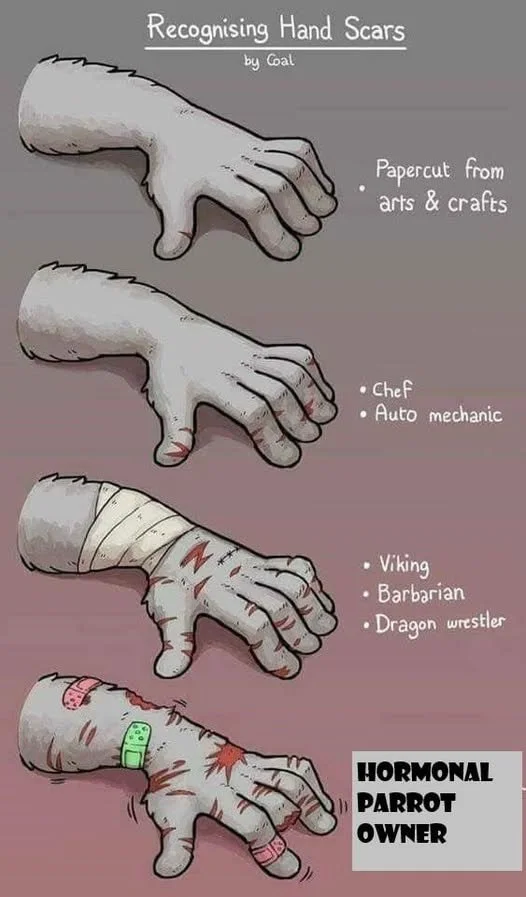
The problem arises when a previously tame, calm and loving birdie suddenly becomes aggressive, biting the hands and anything else they can reach, sometimes painfully and even drawing blood. They can turn aggressive towards a certain person, a certain gender, or everybody. They can be aggressive all the time, for short periods, or just the occasional nip or bite. Periods of aggression can last anywhere from a few days, to weeks, to months and seem to go in a cycle.
The cause for this aggressive behavior usually comes down to hormones and sexual frustration. I often get messages about biting when a bird reaches their sexual maturity, anywhere from 9 to 18 months old. Think of them as teenagers, going through puberty. they can get aggressive, irrational and can lash out.
Thankfully, this coming of age usually does not last long, and you and your birdie can develop a more mature and even closer relationship after a little while. After this, birds can become hormonal again when conditions are right, as they would once a year in the wild. With the proper light, heat, and food sources a bird can go into breeding mode again. Reducing the amount of bright direct light to under 12 hours a day, keeping the temperature steady, and reducing the amount of protein in a birds diet can prevent them from going in to breeding mode in most cases. Not having a nest box or area that promotes nesting is also a big factor.
But the biggest factor in preventing a bird from becoming aroused and going hormonal is where we touch our birds. I see countless videos and pictures of birds being petted on their backs, on their chests and bellies, under their wings and on their tail. This is a very, very bad idea, for both the birds and their owners. Birds do not have external genitalia, and during breeding season a pair will arouse each other by preening these areas. Birds will begin to sexualize each other by stroking each other down their backs, around the tail region, and under the wings. This type of "petting" is like foreplay. It induces strong hormones and gets a bird ready to breed. In fact birds that are not a mating pair will rarely preen each other anywhere other than on their heads and neck.
When a bird is petted anywhere other than their heads and necks, they can become aroused. Hormones are released, and a birdie becomes hormonal. Unless there is a willing mate present, this can quickly lead to sexual frustration, causing a bird to become aggressive and bitey. They can fall in love with a person's hands, and become very jealous of anything they see as competition, be it another person, another bird, or even another part of the owners body such as their face.
To prevent your birdie from becoming hormonal all the time, stay away from petting the body, and stick to the head and neck. These are a birds favorite areas as well, as it is the one place they cannot reach themselves. On a female bird, pay special attention to staying away from the back, tail and vent area. On a male bird stay way from the chest, belly, underwing and vent area.
Fortunately a hormonal episode, even their first one, will not usually last long, and unless they are stimulated it should not happen very often. It is normal for a birdie to nip and bite occasionally in order to "correct" their humans from time to time, or in play or to initiate contact. They will also nibble on ears and neck, bite at skin tags or blemishes, and hunt around to make sure you are nice and parasite free. The problem comes when play turns into a more serious bite, but with time, patience and eventually experience this can be dealt with without serious problems.