
Wing trimming… a touchy subject
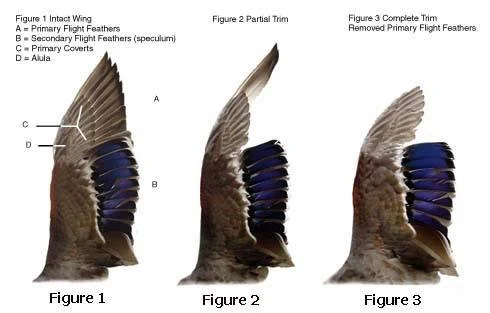
Wing Trimming! I know that this is a very contentious subject, there are people who believe that a birds wings must be fully trimmed for safety, and others who believe that even a partial clipping is cruelty. So all I can do is add my opinion to the mix and give you some information so you can decide for yourselves.
Basically, there are 4 levels of trimming
1. Fully flighted and untrimmed. This is the way I keep my personal pet birdies. Flying is great exercise, and for me it is great fun when they follow you around the house for play, and a bird in flight is a pleasure to watch. But for young birds this can be dangerous, flying into a wall at full speed can quickly kill a bird, flying against a textured ceiling can cause abrasions, glass windows are dangerous, and so many birds are lost through open windows and doors. Even if you are very careful, a houseguest or serviceperson might not be.
2. Partial trim, light: This is where the first two long feathers are kept and the next 2 or 3 are trimmed. The middle wing in the picture below shows this, only in the picture all the other flight feathers are trimmed instead of just 2 or 3. This will slow the birdie down a little, and discourage them from flying too high or fast. They can still get exercise and follow you around the house, but if they make it out of a window, they are more likely to end up in the tree in the front yard instead of the roof of the house three blocks over. This will also make the occasional panic flight of young birds less traumatic and lessen the risk of injury. As well it will make baby birds easier to catch for training. This is the level of trimming I now give to all the baby conures and similar sized birds that are of the "velcro bird" personality.
3. Partial Trim, medium. Similar to the light partial trim, but taking off more of the flight feathers after the two longest outside ones. I like to keep the two outside ones, as these are what give the bird more precision in flying, important for safe landings. Best way to know how many feathers to take is to do it one at a time, observing how the bird flies and handles themselves before deciding to take another feather off each side. This will slow a birdie down even more, and make it hard for them to fly up. They can still do it, but for shorter distances only. This makes birds like budgies, lovebirds, parrotlets and linnies easier to train, as they will depend more on you for transportation and will keep them closer to you. This is only recommended to be done once when a baby, falling back to a light trim after the first molt and when they are more comfortable with their new people. Keeping an adult bird at this level of trim is safer when doors or windows are hard to keep closed, but can result in extra stress on a bird that cannot fly like they are meant to.
4. Full trim. No, do not do this please. This is very hard on the bird, and is usually done by pet stores so they can have a bird that anyone can handle and appears to be tame and friendly. In reality they are just helpless. I have done several RRR's (rescue/rehab/rehome) where a bird has lived for years with a full trim. They all had behavioral problems that cannot be reversed, dependencies and aggression primarily, and most would not fly even after all feathers had grown back in. It can take hundreds of hours of patient work to reverse a birds depression and make them trust again. A bird with a full trim cannot fly at all, and will flop to the ground if they jump off or fall from their perch. A birdie's bones are hollow, and a hard fall can cause serious injury. They will also be unable to fly away from danger, have a hard time getting around their cage, and usually wind up with emotional and behavioral problems. I'm sure most of us have seen the news article about the green cheek that got the feather transplants. While they went a little far, I have encountered several instances personally where a full trim has gone too far, cutting into the meat of the wing resulting in death.
For those of you who would like to do the trimming yourself, consider taking your birdie in to a vet or pet store that offers wing trimming, and see where and how they trim the wings. If you picked up a baby from me you can always just copy what I did. And as always please remember, this is just my opinion on wing trimming and I encourage everyone to learn as much as they can and make their own decisions. Just a warning on doing internet research, often the people with the smallest minds give themselves the biggest voice, their opinions are static and comments toxic. The ability to change one's mind when presented with new information is not a weakness, it is how we learn.